What Comics Get Right About Dads
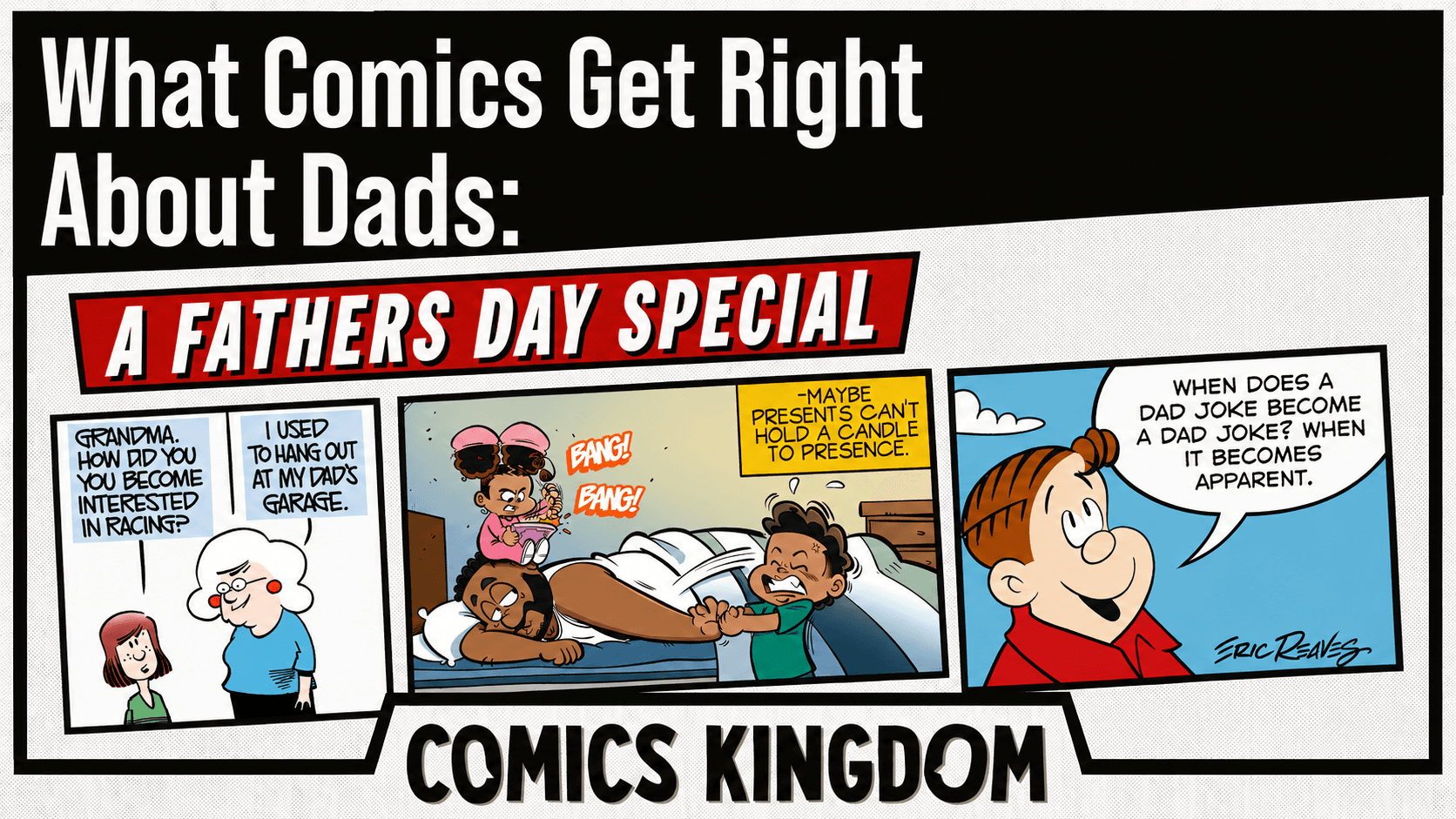
For Father’s Day, we did something a little different on Inside the Kingdom.
Instead of sitting down with one cartoonist or creator, I gathered a few of our King Features editors for a roundtable about dads, father figures, family strips, and the comics that shaped how we think about all of it.
Please check your cookie settings to display this video.
That sounds more formal than it was. Really, it was a group of people who spend their days reading, editing, thinking about, and caring for comics, talking about the funny-page dads who stuck with us. The ones we grew up reading. The ones who remind us of our own families. The ones who are trying their best, even when their best involves a bad joke, a nap, a sandwich, or an absolutely doomed attempt to understand their kids.
And that became the heart of the conversation: comics are really good at showing dads in small, specific, human moments.
Not perfect dads. Not grand speeches. Not the polished version of fatherhood that only exists in commercials where everyone is wearing linen and the grill somehow works.
Comic strip dads are funnier than that. Messier than that. More familiar than that.
We talked about Hi Flagston from Hi and Lois, one of those classic family-strip dads who feels like he belongs to the long tradition of newspaper comics as part of daily family life. Hi and Lois carries that warm, recognizable sense of home: kids, routines, holidays, backyard jokes, and the gentle absurdity of keeping a family moving. It has that unmistakable “comics page on the kitchen table” feeling.
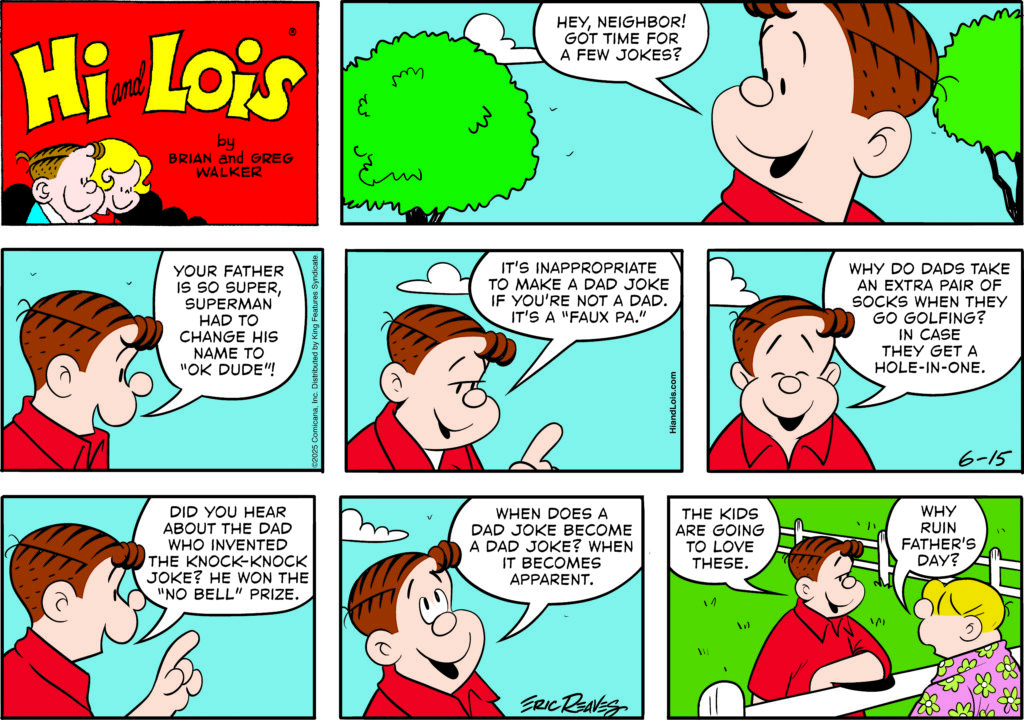
This strip is a perfect example of one of the things that makes fathers such great dads: dad jokes! The cornier the joke, the better — and this one delivers.
Jennifer Beck
We talked about Popeye, too, not just as the sailor man, but as a father figure to Swee’Pea. That opened up one of my favorite threads in the conversation: how many readers first met these characters through someone else. A parent handing over the comics section. A Sunday paper split between the “boring news” and the funnies. A strip becoming part of a family ritual before you even knew the names behind it.
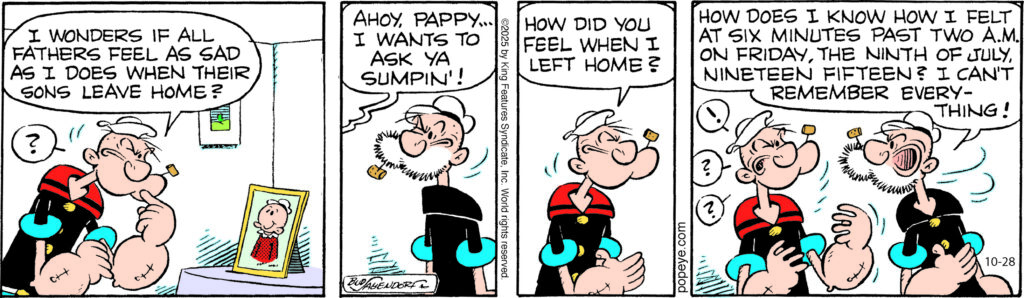
Poopdeck Pappy sometimes gets a bad rep as a pop (not always, but sometimes). This is a cute, wistful dad moment.
Amy Anderson
That is something I keep coming back to with Comics Kingdom. These characters are not just content. They are inherited. Shared. Passed across breakfast tables, clipped from newspapers, sent in texts, screenshotted to family group chats, and remembered years later.
Then there are the dads who feel specific because they are flawed in such familiar ways.
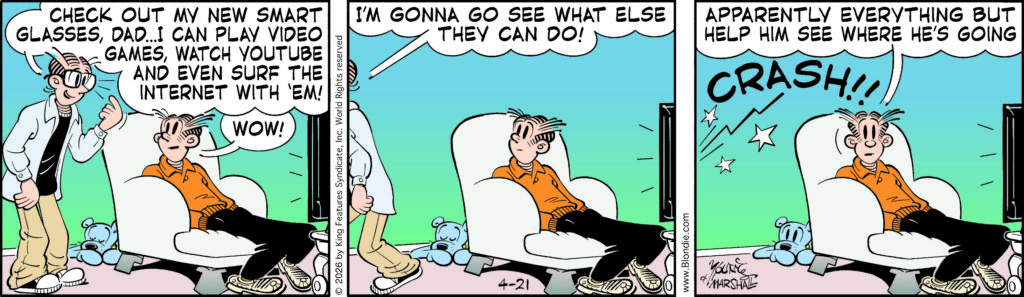
Dagwood Bumstead from Blondie came up, naturally. Yes, we all know Dagwood for the sandwiches. That is basically his constitutional right at this point. But underneath the running gags, he is also a loving, supportive father. He does not always understand what his kids are talking about. He is often a few steps behind the modern world. But he is present. He is trying. Sometimes that is the whole joke, and sometimes that is the whole truth.
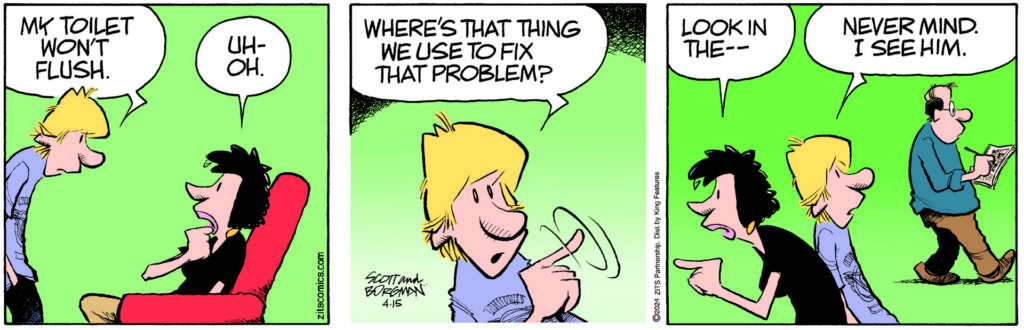
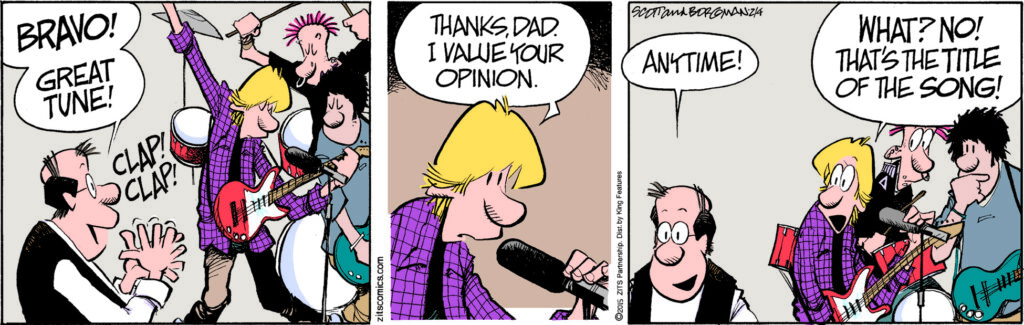
The same came up with Walt from Zits. I have said it before, and I will probably keep saying it until it becomes a problem: I am growing into Walt. There is something painfully accurate about the way Zits captures the teenage years from both sides. Jeremy’s world makes perfect sense to Jeremy. Walt’s world makes perfect sense to Walt. The comedy lives in the gap between them, but so does the affection.
One strip we discussed showed Walt offering support to Jeremy’s band, then wisely taking the smallest possible victory and walking away before it could be taken from him. That is a deeply advanced dad move. Applaud, retreat, survive.
Ted Forth from Sally Forth brought a different kind of energy to the conversation. Ted is not the old emotionally unavailable sitcom dad. He is open, nerdy, affectionate, deeply weird in a way that feels earned, and completely himself. He is the kind of comic dad who makes life more interesting for everyone around him, whether or not they asked for that.
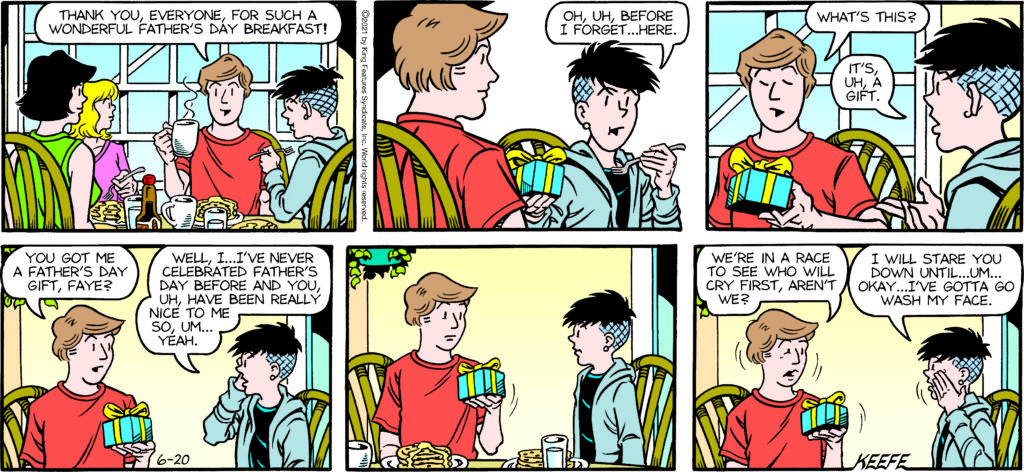
Jen called him “goofy” and “lovable,” which feels right. Ted is the dad who might embarrass you, but only because he is fully committed to the bit. There is something modern and generous about that. He is not just there to provide structure or be the punchline. He has his own inner life, his own fandoms, his own strange little missions. That makes him feel alive.
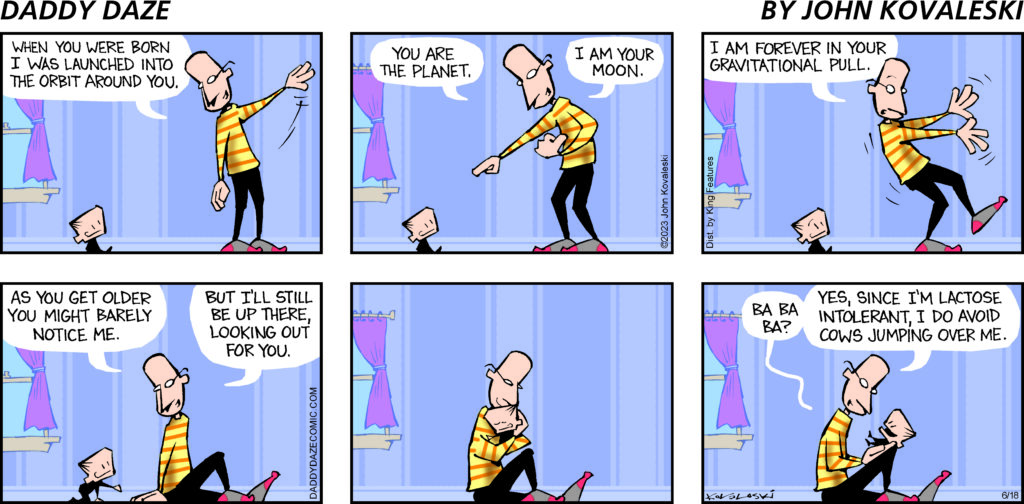
We also spent time talking about newer or more contemporary portraits of fatherhood. Daddy Daze came up as a beautiful example of a devoted dad navigating life with his young son, Angus. The strip has a tenderness to it that really lands, especially for anyone who has watched a child grow and felt time moving faster than seems fair or legal.
Beware of Toddler opened up another important part of the conversation: the stay-at-home dad. We talked about how fatherhood in comics has shifted over time, because fatherhood in real life has shifted too. The classic newspaper dad often went to work, came home tired, and orbited family life from the dinner table or living room chair. Today, more strips are making room for dads who parent in different ways, who provide emotionally, who are present at home, and who are still figuring out what that means.
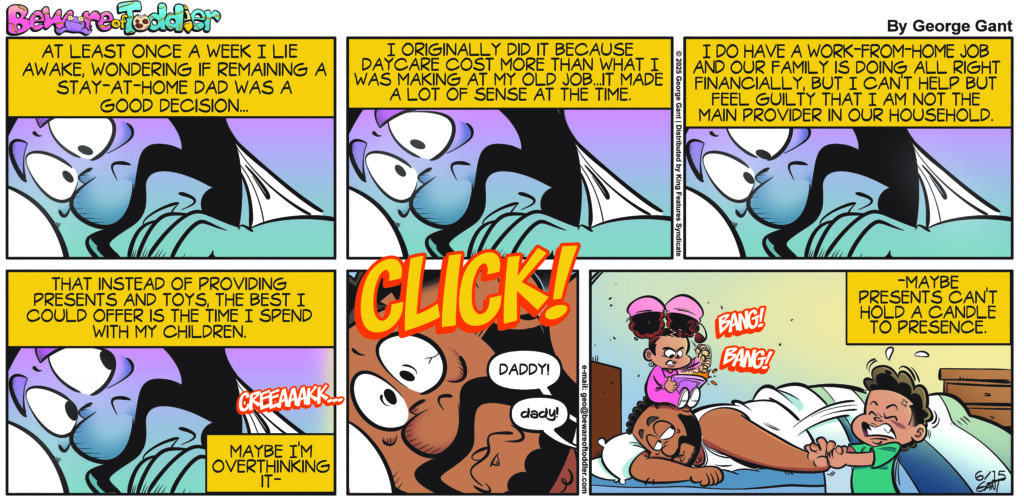
That is one of the great things about comics. They preserve tradition, but they also change with us.
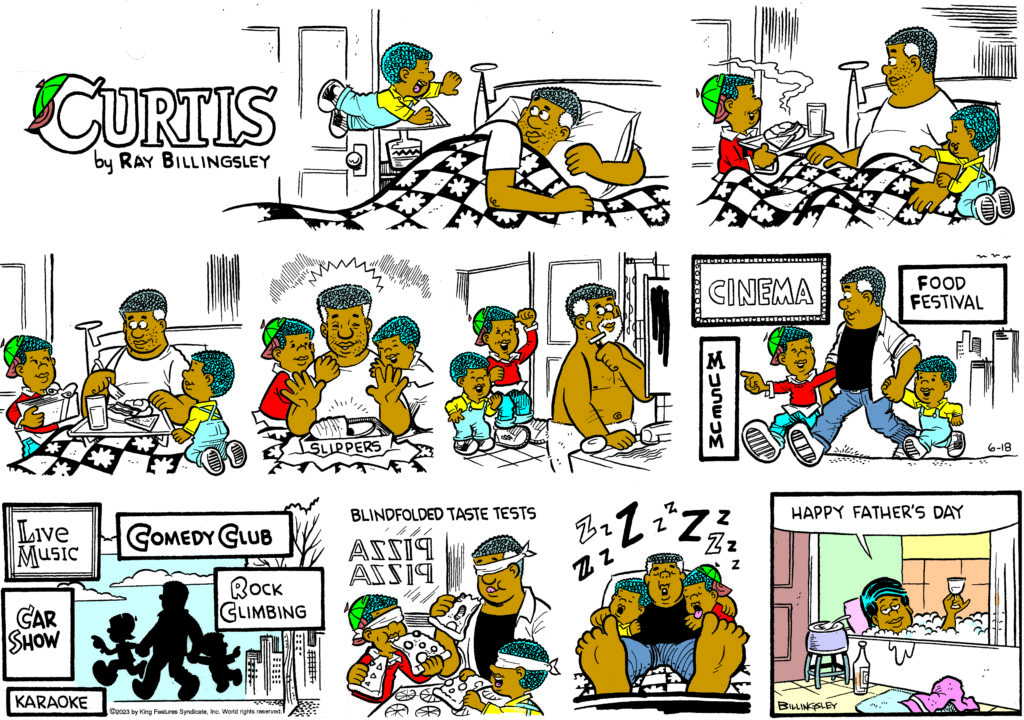
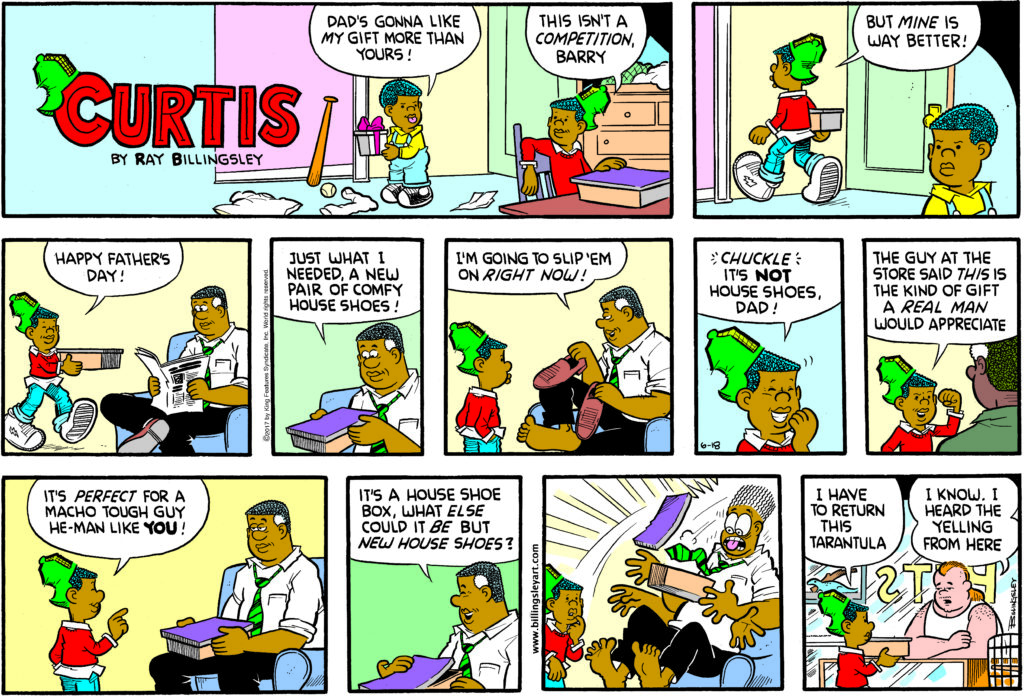
Curtis’ dad, Greg, gave us another angle. Being Curtis’ father is not for the weak. Curtis is always scheming, always negotiating, always one step away from turning a normal family moment into a full household event. But that is what makes the strip work. Greg is overworked, often exasperated, and very much the kind of dad who has earned the right to sit down for five minutes. And still, underneath the frustration, there is love.
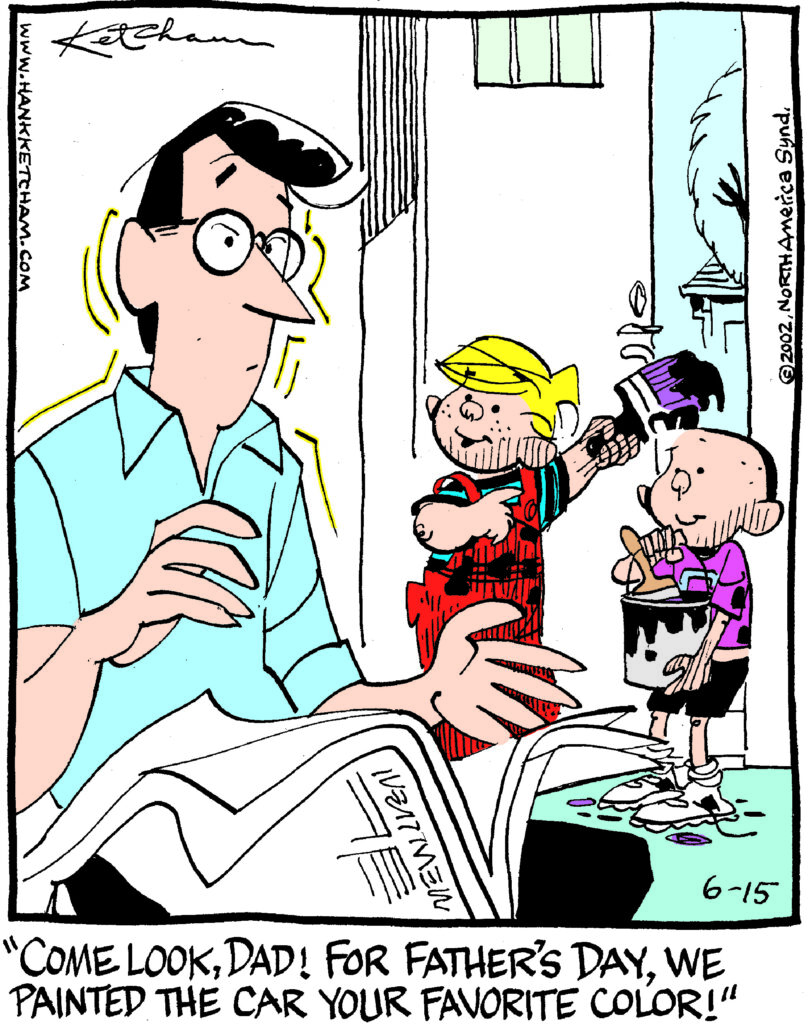
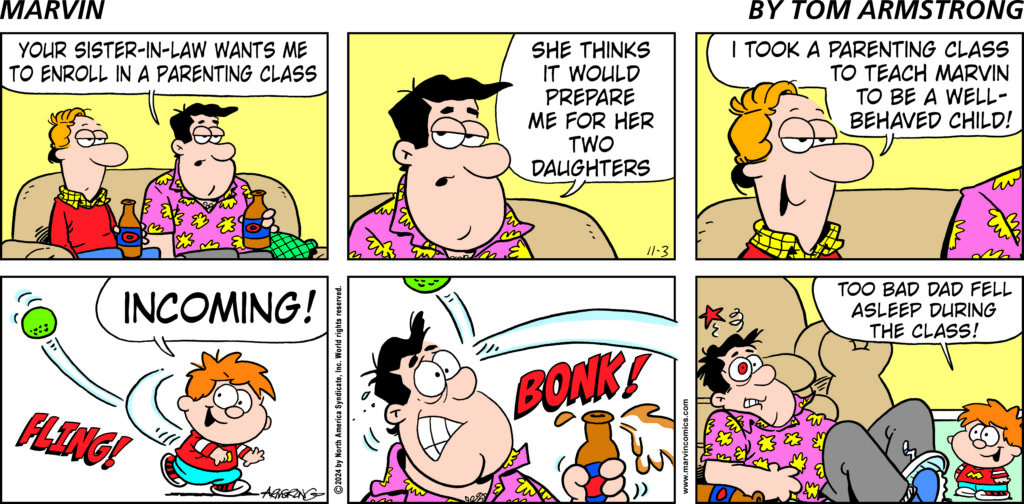
That came up again when we talked about Dennis the Menace and Marvin. Some comic kids are simply built to test the structural integrity of every adult around them. Dennis and Marvin both have that gift. Their fathers and father figures are not always calm, not always wise, and not always prepared, but they are there. Sometimes asleep. Sometimes confused. Sometimes holding the emotional line with nothing but a newspaper and blind optimism.
Then there was Gearhead Gertie, which brought one of the most personal moments in the conversation. Demi talked about growing up as a tomboy and bonding with her dad through the kinds of things people too often label as “boy stuff”: cars, chores, grilling, fixing things. The strip she chose showed Gertie’s early interest in racing, and it turned into a larger appreciation for dads who let their daughters be exactly who they are.
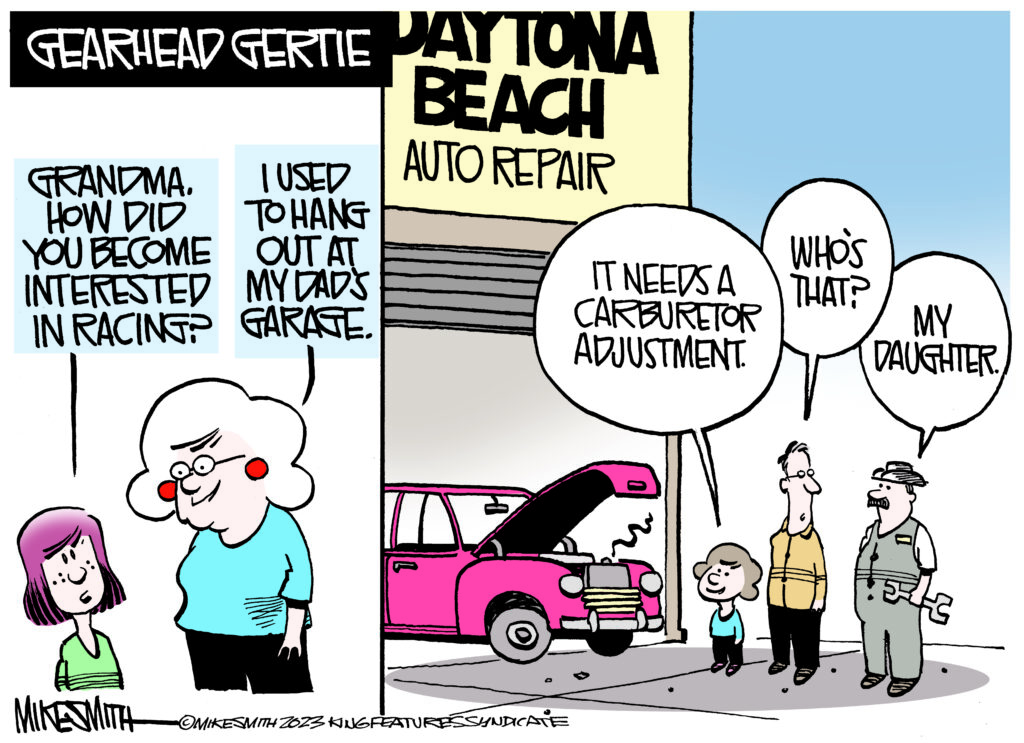
That is a different kind of fatherhood, and an important one. The dad who does not narrow the world for his child. The dad who opens it.
We closed with Mutts, because Patrick McDonnell has a way of finding the soft spot without making it feel forced. The strip we discussed captured the simple beauty of dads showing up. Doing the little things. Being there. Not always perfectly, not always loudly, but steadily.
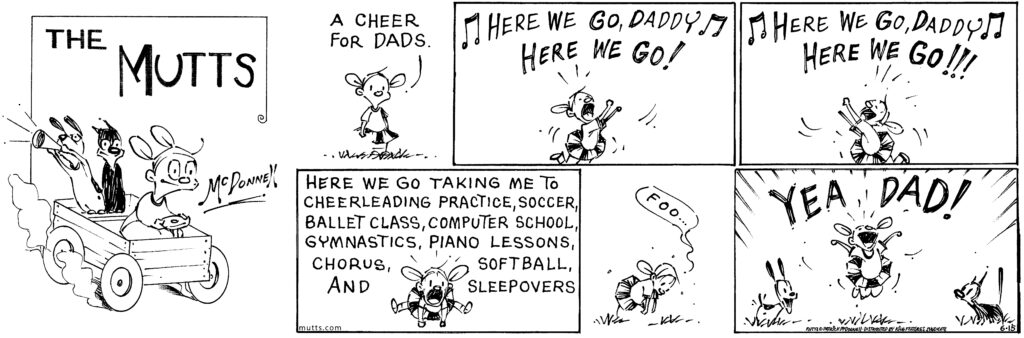
That is probably what comics get right about dads more than anything else.
They understand that family life is built in tiny panels.
A bad joke. A shared newspaper. A kid asking for help. A dad pretending not to be emotional. A parent trying to understand a world that changed while they were at work. A daughter learning she is allowed to be herself. A father figure who is not perfect, but present.
The funny pages have always made room for that. They let us laugh at dads, with dads, and sometimes because we have become the dads we used to laugh at.
That last part is rude, frankly, but accurate.
This Father’s Day, I hope you revisit a few of the comic dads and father figures across Comics Kingdom. Read the classics. Find a newer favorite. Send a strip to your dad, your grandfather, your father figure, or someone who has shown up for you in that quiet, steady way.
Because whether it is Hi, Popeye, Hägar, Dagwood, Walt, Ted Forth, Greg, Marvin’s dad, Dennis’ dad, Gertie’s dad, or the many others who have filled the funny pages for generations, these characters remind us that fatherhood in comics has never been one thing.
It is funny. It is messy. It is tired. It is loving. It is occasionally asleep in a chair.
And more often than not, it is trying its best.